
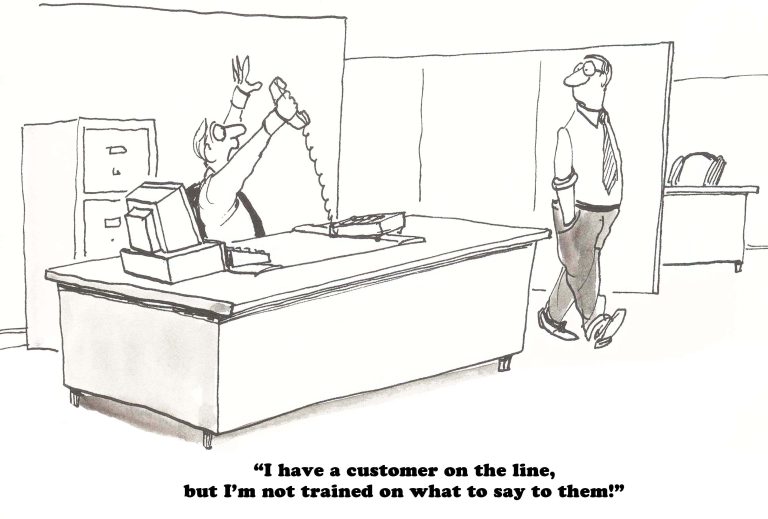
Why is there such a high turnover of staff in the complaints department?


The best sales training is not sales training
The title of this section may lead some of you to believe that this is a mistake, however I have a good reason for this title. I strongly believe that if you take a team of sales agents who require further training and divide them into two groups – where one group is put through intensive sales training and the other group is put through attitude and motivational training instead – the group which underwent the attitude and motivation training will in most cases perform better and show more improvement than the other group.
There are many reasons for this, but perhaps the most important one is that if the trainee is simply taught more and more sales techniques, product features and given ‘motivation’ such as, ‘you need to improve your figures or you may be replaced’, then the person’s inner fears, doubts and insecurities are not even mentioned let alone dealt with. It is my personal belief – as well as the belief of a lot of top sales trainers – that that is where the real problem lies; the inner person. The best training is to change the person’s perception of what ‘sales’ are really like, so if instead of only showing different ways of describing the product or handling customers’ objections you change their perception then the results will be overwhelming.
How to handle rejection
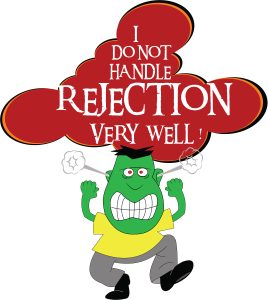
For the time being forget about all the sales training and motivation processes, pretend they don’t exist. Let’s concentrate on rejection, what it is, how it affects your feelings, skills and attitude towards life.
Rejection is a frequent experience in both sales and life in general. It can happen in areas such as relationships, friendships, school, or job applications, and is something that cannot be avoided. Despite this, most people are able to overcome it with time. Dealing with rejection can be challenging, but it’s crucial to keep in mind that it’s a natural part of the journey. Keep pushing forward towards your objectives, understanding that rejection doesn’t define your value or skills. With determination and a positive mindset, you can gain knowledge and develop from these situations.
Rejection it’s practically written into the job description, the potential for being rejected is a reality in sales.
Rejection is a guaranteed aspect of sales, no matter how appealing your pitch or offer may be. Nevertheless, it is how you manage it that distinguishes you.
The fear of rejection is a natural response of our brains. As we move forward, we tend to avoid pain, be it physical or emotional. When faced with the possibility of being rejected, our brains issue a warning that triggers us to take flight.
It’s not all bad. Rejection is actually a fundamental part of personal development and growth. As salespeople, we cannot avoid the disappointment of rejection, but we have the power to choose our reaction towards it.
Salespeople hear “no” on a daily basis, which can impact their livelihood and contribute to a high turnover rate in the sales profession. Therefore, it’s essential for salespeople to develop resilience in order to handle rejection and bounce back quickly, which is crucial for their success.
Have you ever imagined a world where rejection doesn’t exist? Can you picture working for a company that offers products that appeal to everyone, and every time you present it to a customer, they say yes? Do you believe such a world is possible?
I would be very interested in working for a company like that. However, if such a company and product existed, would your employer require your services for selling it?
Unfortunately, the answer is no.
When facing rejection, try not to take it personally, as it usually has more to do with the situation than with you as a person.
No, sales slumps will always be a part of selling, they're like tests; they let you know if you're heading in the right direction.
Is there a way to completely avoid sales slumps?
Yes there is and it's a very simple one; get out of sales and do something else!
If you've never had a sales slump, it could be for the following reasons:
- You haven’t been in sales long enough
- Your targets and goals are set too low and you are not hungry enough
- You live in a fantasy world
- You are cheating
- Or, a combination of these four
What Are They?
Experiencing sales slumps are common occurrences, regardless of your sales skills. It is vital to remember that this doesn't indicate any shortcomings on your part or that your job is at risk. Just as day follows night, ups and downs in sales are natural. Whenever you experience a slump and eventually emerge from it, your abilities improve. Failing to learn how to overcome a slump will prevent you from achieving greatness in the sales industry.
Failing to follow all of the necessary steps in the sales process could ultimately result in a drop in sales. A single loss can trigger a chain reaction of more losses. You may become increasingly concerned about your work performance. Then a colleague suggests that you may be experiencing a slump, and you begin to see it as an official slump. Unfortunately, the frustration and anger you focus on the situation only serve to worsen and prolong it.
Don't Let People Talk You Into A Slump
It's important to understand that at times some colleagues may express negative opinions about your sales performance. However, it's important to remember that their views may be affected by their own personal struggles and an overall negative mindset.
It's essential that you don't allow their pessimism to affect your perspective, which makes it imperative that you always evaluate your sales performances by your own standards.